

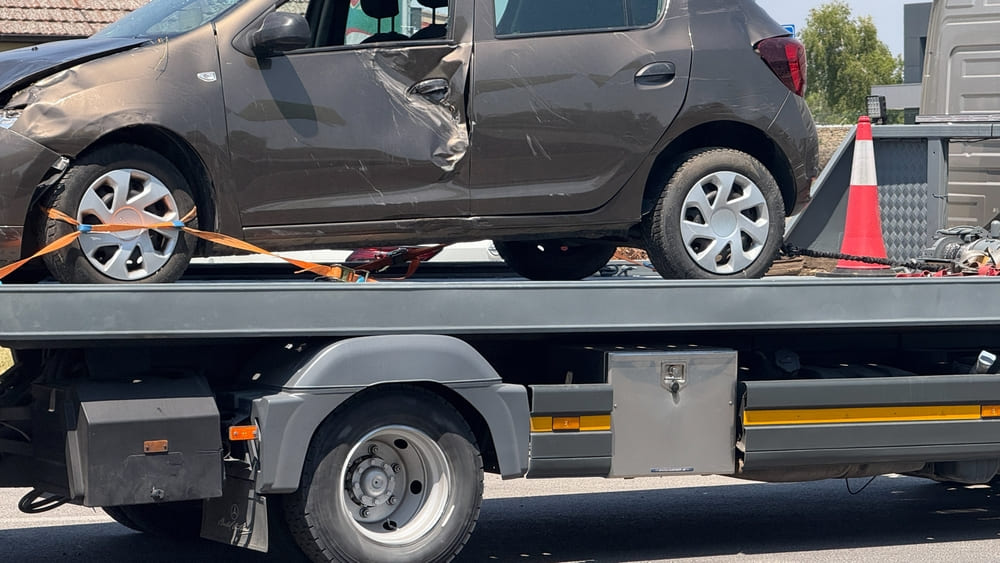
You get your car back from a tow and something is wrong. A new scratch across the bumper. A dent that was not there before. A broken side mirror. Your immediate question is a fair one: if a tow truck damages your car, who pays for it?
The short answer is that the towing company can be held liable for damage caused by their negligence during the towing process. But knowing your rights and acting on them quickly are two different things. In New York, how you respond in the first hours after discovering the damage makes a significant difference in whether you recover the cost of repairs.
This guide walks you through every step, from documenting the damage at the scene to filing a claim and getting your vehicle properly repaired.
Are Towing Companies Liable for Damage They Cause?
Yes, under New York law, a towing company has a legal duty of care to handle your vehicle safely. When a tow truck damages your car through improper loading, negligent driving, or inadequate securing of your vehicle, the company can be held liable for the cost of repairs.
Towing companies operating in New York City are required by law to carry minimum insurance coverage. According to the NYC Department of Consumer and Worker Protection (2025), licensed tow truck companies in NYC must maintain at least $25,000 in what is known as “on hook” coverage, meaning coverage specifically for damage to a vehicle in their care, custody, and control. This coverage exists precisely for situations where a tow truck damages your car during transport or at a storage facility.
Common examples of tow truck negligence that give rise to a damage claim include:
- Improper attachment of the vehicle to the tow truck, causing scrapes or structural stress
- Using the wrong towing method for your vehicle type, such as using a hook lift on an all-wheel-drive vehicle
- Dropping the vehicle during loading or unloading
- Causing additional damage while maneuvering in tight city streets
- Damage to the vehicle while stored at an impound yard
You can file a complaint for any issues about a tow truck company or a tow truck driver through the NYC Department of Consumer and Worker Protection (DCWP).
Types of Damage Commonly Caused by Tow Trucks
| Type of Damage | Common Cause | What to Check |
|---|---|---|
| Bumper scrapes and cracks | Improper hook placement or dragging | Full bumper perimeter, mounting points |
| Undercarriage damage | Incorrect lift angle or ground contact | Exhaust, oil pan, transmission housing |
| Transmission damage | Towing a 4WD vehicle on two wheels | Drive feel, transmission fluid, shifting |
| Paint scratches | Chains, straps, or equipment contact | All body panels, door edges, roof rails |
| Wheel and rim damage | Improper dolly placement | All four rims, tire sidewalls |
| Structural stress | Excessive winching force | Frame alignment, door gaps, panel fit |
If you notice any handling issues, unusual sounds, or warning lights after your vehicle is returned from a tow, have the vehicle inspected before assuming the damage is only cosmetic. Hidden structural or mechanical damage caused during towing can affect your vehicle’s safety and worsen over time if not addressed. Our frame straightening service covers structural damage assessment and repair for vehicles that have been improperly towed or handled.
What to Do When a Tow Truck Damages Your Car
Step 1: Document the Damage Immediately
Before you move the vehicle or sign anything, photograph every area of damage from multiple angles. Capture the tow truck, its license plate, and any company markings. Time-stamped photos taken at the scene are your most important evidence for any claim that follows.
Step 2: Notify the Towing Company in Writing
Report the damage to the towing company in writing as soon as possible, whether by email or text. A written record is harder to dispute than a verbal complaint. State clearly what was damaged, when you discovered it, and that you hold them responsible.
Step 3: Get an Independent Repair Estimate
Before accepting any payment from the towing company or their insurer, get a written estimate from a qualified auto body repair shop. An independent estimate reflects the true cost of repairs and identifies any damage that may not be immediately visible. For a full breakdown of what professional repair involves, visit our body work and car repair service page.
Step 4: Notify Your Own Insurance Company
Even when the towing company is at fault, notifying your own insurer is a smart move. Your insurer can communicate with the towing company’s insurer on your behalf and in some cases advance repair costs while liability is being resolved. For more on how coverage applies in third-party damage situations, read our guide on car insurance and auto body repair coverage.
Step 5: File a Complaint With the NYC DCWP
If the towing company disputes your claim or goes unresponsive, file a formal complaint with the New York City Department of Consumer and Worker Protection. The DCWP licenses and regulates tow truck companies in New York City and can investigate complaints against them. File online through the NYC DCWP website or by calling 311.
Step 6: Use Small Claims Court if Needed
If direct negotiation and the DCWP process do not produce a fair result, New York City small claims court handles cases up to $10,000, which covers most towing damage repairs. Your strongest evidence will be time-stamped photos, an independent written estimate, and your written correspondence with the towing company.
Your Rights as a Vehicle Owner in New York City
New York City has some of the more detailed towing regulations in the state. As a vehicle owner, you have specific rights when your car is towed that are worth knowing before you find yourself in this situation.
- You have the right to choose your own repair shop. No insurance company and no towing company can require you to have your vehicle repaired at a specific facility.
- You have the right to inspect your vehicle at the storage facility during normal business hours at no additional charge.
- The towing authorization you sign does not authorize repairs. You must separately authorize any repair work.
- Every licensed tow truck operator in New York City must carry a DCWP tow truck driver’s license and must provide their license number upon request.
- You have the right to file a complaint with the DCWP against any licensed towing company operating in New York City.
Frequently Asked Questions
Document the damage immediately with time-stamped photographs before moving the vehicle, signing any paperwork, or leaving the towing company’s location. Written documentation created at the scene is your most important evidence for any claim that follows.
A towing company can dispute a damage claim, but disputing it does not end your options. If direct negotiation fails, you can file a complaint with the NYC DCWP, pursue the claim through your own insurance company, or file in small claims court. Having thorough documentation makes any of these paths significantly stronger.
Licensed tow truck companies in New York City are required to carry a minimum of $25,000 in on-hook coverage, which specifically covers damage to a vehicle in the towing company’s care, custody, and control. This is in addition to their general liability insurance requirements.
Yes. New York law gives you the right to choose your own repair facility regardless of what the towing company or any insurance adjuster suggests. Your insurer may recommend a shop, but if you choose an insurer-recommended shop, the insurer becomes responsible for the adequacy of those repairs.
Operating a towing business in New York City without a DCWP license is a violation of NYC law. If you suspect the company is unlicensed, you can verify license status on the DCWP website or by calling 311. An unlicensed company may have fewer financial protections in place, making your own insurance coverage and small claims court the primary paths to recovery.
Know Your Rights, Protect Your Car
When a tow truck damages your car, your priority after documentation and notification is making sure the repairs are done correctly. Towing damage can affect body panels, paint, structural components, and in some cases the drivetrain. Cosmetic repairs that do not address underlying damage leave problems that compound over time and can affect both your vehicle’s value and its safety.
Getting a thorough independent estimate from a qualified body shop is the clearest way to understand the full scope of what needs to be fixed and to ensure the towing company or their insurer covers the actual cost of restoring your vehicle to its pre-damage condition. Visit our insurance claims service page to learn how the claims process works from the repair side and what to expect when a third party is responsible for the damage to your vehicle.