

Table of Contents
- 1. Why Unrepaired Frame Damage Is a Bigger Problem Than It Looks
- 2. What Unrepaired Frame Damage Does to Steering and Handling
- 3. How Frame Damage Affects Your Tires and Suspension
- 4. The Safety Consequences of Driving on a Damaged Frame
- 5. How Unrepaired Frame Damage Compounds Over Time
- 6. What Frame Damage Means for Your Vehicle's Value
- 7. How to Know If Your Frame Was Damaged in a Collision
- 8. What the Repair Process Involves
- 9. Frequently Asked Questions
- 10. Understanding the Full Picture
After a collision, most drivers focus on what they can see. Dents, scratches, broken lights, and damaged bumpers are the obvious signs. What sits underneath the body panels is often harder to notice but far more consequential. Unrepaired frame damage affects nearly every system in a vehicle, and the problems it creates tend to get worse, not better, with every mile driven.
This guide covers what happens when frame damage is left unaddressed, why the consequences extend well beyond handling and alignment, and what drivers in New York should understand about their options.
1. Why Unrepaired Frame Damage Is a Bigger Problem Than It Looks
The frame is the structural foundation of the vehicle. Every other system, including suspension, steering, drivetrain, body panels, and safety equipment, is mounted to or dependent on the frame maintaining its original geometry.
When a collision shifts, bends, or twists that geometry even slightly, the ripple effect touches everything attached to it.
Unrepaired frame damage does not stay contained to the area that was struck. Force distributes through the structure, and misalignment at one point creates compensating stress at others.
Over time, that stress works against components that were not designed to absorb it.
The challenge is that many drivers do not connect the symptoms they experience to the underlying structural issue that caused them. A pull to one side, uneven tire wear, or a shimmy at highway speed can all trace back to unrepaired frame damage that went undetected after a collision.
2. What Unrepaired Frame Damage Does to Steering and Handling
One of the most immediate effects of unrepaired frame damage is a change in how the vehicle steers and tracks.
A properly aligned frame keeps the wheels pointed where the driver intends. When the frame is distorted, the steering geometry shifts out of spec. The result is a vehicle that drifts or pulls even when the wheel is held straight.
Common steering and handling symptoms caused by frame distortion include:
- Persistent pulling to one side that returns after alignment adjustments
- A steering wheel that sits off-center when driving straight
- Increased effort required to hold a straight line at highway speed
- Unstable or wandering handling through turns and lane changes
These symptoms are often addressed with a wheel alignment, but alignment adjustments cannot compensate indefinitely for a frame that is structurally out of specification. The problem resurfaces because the root cause has not been corrected.
3. How Frame Damage Affects Your Tires and Suspension
Unrepaired frame damage puts abnormal stress on suspension components and creates irregular contact between the tires and the road surface.
A vehicle’s suspension is engineered to function within a specific range of angles and distances. When the frame shifts those reference points, the suspension operates outside its designed parameters.
This accelerates wear on control arms, ball joints, tie rods, and bushings, which are components that carry significant load during normal driving.
The tire impact is equally measurable:
- Camber misalignment causes tires to wear on one edge rather than across the full tread width
- Toe misalignment causes rapid scrubbing of the tread surface
- Caster misalignment affects straight-line stability and increases rolling resistance
Tires worn unevenly by frame-related misalignment cannot be corrected by rotation alone. The wear pattern will continue as long as the underlying geometry remains out of specification.
According to the National Highway Traffic Safety Administration, vehicle structural integrity is a foundational element of occupant protection in crashes. A frame that has been compromised and not restored to manufacturer specifications affects how the vehicle responds in any subsequent collision, not just in handling during everyday driving.
4. The Safety Consequences of Driving on a Damaged Frame
The most serious consequence of unrepaired frame damage is what it means for occupant protection in a future collision.
Modern vehicle frames are engineered with crumple zones. These are areas designed to absorb and redirect impact energy in a controlled pattern. This controlled deformation protects the occupant compartment by keeping it as intact as possible during a crash.
A frame that has already been distorted no longer crumples in the engineered pattern. The energy pathways designed into the structure have been altered. In a subsequent collision, the vehicle may not absorb and redirect force the way it was designed to.
Safety systems that depend on correct mounting geometry can also be affected when the frame has shifted:
- A mispositioned airbag sensor may not trigger correctly
- A door that does not seal properly in a distorted frame may open or fail to contain occupants during a rollover
- Seatbelt anchors may not hold at the designed load angles
Addressing unrepaired frame damage is not only a matter of performance. It is a matter of whether the vehicle still provides the level of protection its design intended.
5. How Unrepaired Frame Damage Compounds Over Time
Frame damage that is not corrected does not remain static. The misalignment it creates generates ongoing stress throughout the vehicle’s structure, and that stress accelerates wear on components that would otherwise last for years.
The compounding effect works in several directions at once:
- Abnormal suspension loads cause premature failure of control arms, ball joints, and wheel bearings
- Uneven tire wear reduces tread life and increases the risk of a blowout at speed
- Body panel gaps that widen over time allow moisture to enter and accelerate corrosion
- Stress concentrations at the edges of the distorted area can develop into cracks in the metal over time
Each of these secondary effects generates its own repair costs. A driver who delays addressing unrepaired frame damage after a collision often ends up spending significantly more on the cascade of component failures than the original structural repair would have cost.
For drivers who want to understand what the structural repair process actually involves, the frame straightening service page covers the equipment, process, and measurements used to restore a vehicle to manufacturer specifications.
6. What Frame Damage Means for Your Vehicle's Value
Unrepaired frame damage has a direct and significant effect on what a vehicle is worth at resale.
Vehicle history reports flag structural damage when it has been reported through an insurance claim. A buyer or dealer reviewing that report will apply a discount to the vehicle’s appraised value.
When the damage was repaired professionally and documented, that discount is typically smaller. When the damage was not repaired at all, the discount is larger, and the buyer has legitimate grounds to question the vehicle’s roadworthiness.
Buyers who inspect a used vehicle in person look for specific signs of unrepaired frame damage:
- Uneven panel gaps between the hood, doors, fenders, and trunk
- Misaligned body panels that suggest the underlying structure has shifted
- Fresh paint on isolated panels that may indicate cosmetic repair over structural damage
- Tires with irregular wear patterns visible from a short distance
According to the NY DMV Know Your Rights in Auto Repair, consumers in New York have the right to written estimates and itemized invoices for all repair work performed. Keeping this documentation as part of the vehicle’s record supports its value at resale and provides evidence that the frame damage was addressed to a professional standard.
7. How to Know If Your Frame Was Damaged in a Collision
Not all frame damage is obvious immediately after a collision. Some misalignment is only detectable through a computerized measuring system that compares the vehicle’s actual dimensions to manufacturer specifications.
That said, several observable signs suggest frame damage may be present:
- The vehicle pulls consistently to one side when driving on a level road with hands loose on the wheel
- The steering wheel sits noticeably off-center when driving straight
- Doors or trunk do not open, close, or seal the way they did before the collision
- Squeaking, creaking, or new noises from the body structure during normal driving
- Unusual vibration at highway speeds that was not present before the accident
- Tires develop uneven wear in the weeks following a collision
Any of these signs after a collision warrant a professional structural assessment before concluding the vehicle is undamaged.
According to the NY DMV Vehicle Safety Inspection Program, New York State safety inspections specifically check the chassis and frame for breaks, cracks, and severe rust at suspension attachment points. A vehicle with unrepaired structural damage may fail to meet the minimum safety standards required for legal operation on public roads.
For drivers who want to understand what a thorough post-accident structural assessment looks like, the auto body shop in Brooklyn NY page covers what a complete collision inspection involves.
8. What the Repair Process Involves
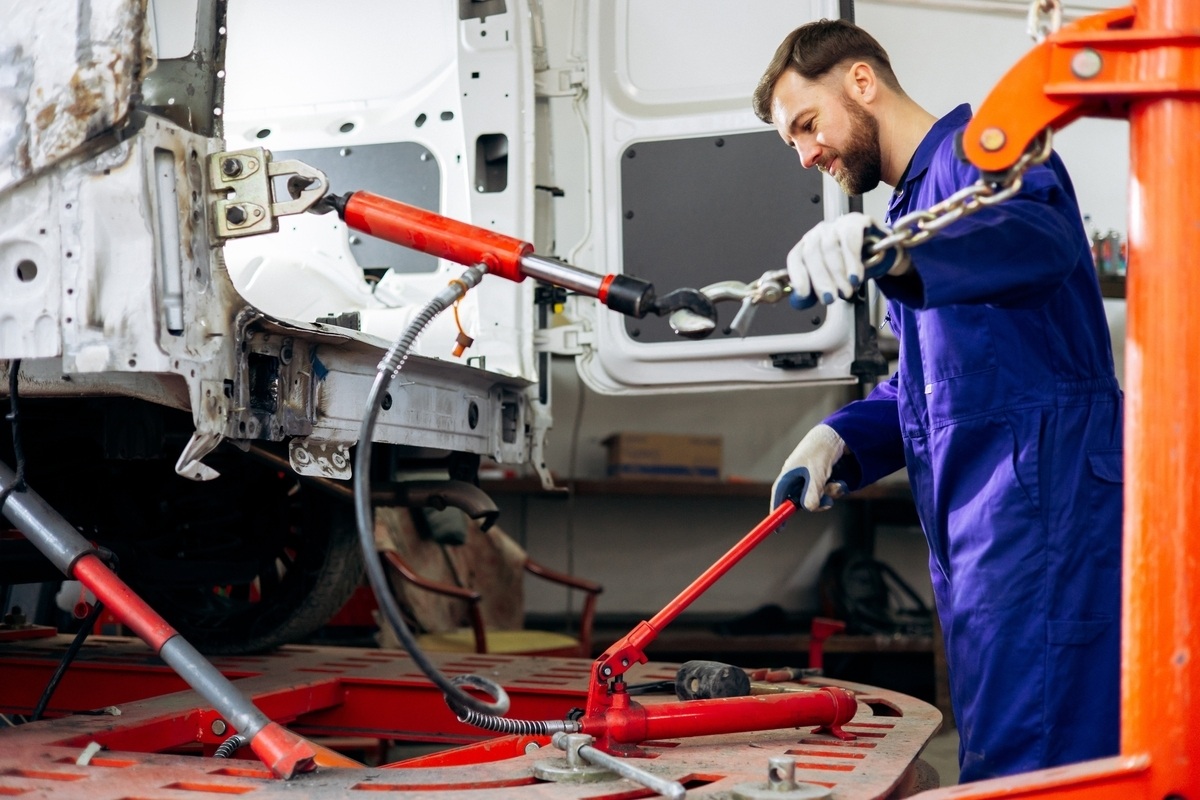
Repairing frame damage requires equipment that most general repair shops do not carry. The process involves more than physical straightening. It requires precise measurement to verify that the correction has returned the vehicle to factory specifications.
The steps involved in a professional frame repair include:
- Initial computerized measurement to map the exact distortion against factory data
- Securing the vehicle to a frame machine that applies controlled, calibrated force
- Applying hydraulic pressure to distorted areas while monitoring measurement changes in real time
- Verifying post-repair measurements against manufacturer tolerances
- Wheel alignment to confirm that the corrected frame geometry translates to proper wheel positioning
- Final inspection of all components that interface with the repaired area
The measurement phase is what distinguishes a professional frame repair from an approximate one. Straightening the metal to a visual approximation is not sufficient. The vehicle’s structure must be returned to within manufacturer tolerances for the repair to restore proper handling, safety system function, and component longevity.
For a broader view of what a complete collision repair involves from structural work through to finished panels, the collision repair quality in Brooklyn page walks through the full standard.
9. Frequently Asked Questions
Driving on unrepaired frame damage is not recommended. The vehicle’s handling, alignment, and safety system geometry are all affected by structural distortion. The longer the vehicle is driven in that condition, the greater the secondary damage to suspension components and tires.
Frame damage does not require a high-speed or severe collision. Low to moderate speed impacts, particularly those involving a direct strike to the corner or side of the vehicle, can cause measurable structural distortion. The direction of the force matters as much as the magnitude.
Wheel alignment can partially compensate for frame distortion, but it cannot correct the underlying structural issue. Alignment adjustments made on a distorted frame will return to the problem state because the reference geometry they are set against is out of specification.
Collision coverage typically includes frame damage repair. The specific terms depend on the policy. Documenting the damage through a professional assessment as promptly as possible after the collision supports the claim process.
The timeline depends on the extent of the distortion and whether additional components need to be removed for access during the repair. A straightforward structural repair may take one to two days. More extensive damage involving multiple structural zones takes longer.
No. Accurate frame repair requires a computerized measuring system and a dedicated frame machine that can apply calibrated force at specific points. Visual or approximate straightening without measurement verification does not confirm that the vehicle has been returned to manufacturer specifications.
10. Understanding the Full Picture
Unrepaired frame damage is one of the most consequential issues a vehicle can carry after a collision. It is not always dramatic, but it affects the systems that depend on the frame for their reference geometry.
Steering, suspension, tires, safety systems, body alignment, and resale value are all connected to whether the frame sits where it was designed to sit.
The decision to address or postpone a structural repair after a collision is not simply a cost calculation for the moment. It is a decision about how the vehicle performs, how it protects its occupants, and what it will be worth over the years it continues to be driven.
Understanding that full picture is what separates an informed decision from one made without all the relevant information.
💡 Key Takeaways
- Unrepaired frame damage affects steering, suspension, tires, safety systems, and vehicle value, not just the area that was struck
- Handling symptoms like pulling, off-center steering, and unstable tracking are common consequences of structural distortion
- Tires wear unevenly on a distorted frame because the suspension geometry is operating outside its designed parameters
- Crumple zones and safety system mounting depend on correct frame geometry. A distorted frame changes how the vehicle performs in a future collision
- Unrepaired frame damage compounds over time through accelerated wear on suspension components and increasing corrosion at structural gaps
- Vehicle history reports reflect structural damage, and unrepaired distortion significantly reduces resale value compared to a professionally documented repair
- New York State safety inspections check the chassis and frame specifically. A vehicle with unaddressed structural damage may fail to pass
- Frame repair requires computerized measurement and calibrated equipment. Visual straightening without measurement verification is not sufficient
WORRIED YOUR CAR MAY HAVE FRAME DAMAGE AFTER A COLLISION?
Understanding what unrepaired frame damage means for your vehicle’s safety, handling, and value helps drivers make better decisions after an accident. If you have questions about the structural assessment or repair process, our team is available to help.
References
- National Highway Traffic Safety Administration — Crashworthiness: https://www.nhtsa.gov/research-data/crashworthiness
- NY DMV — Know Your Rights in Auto Repair: https://dmv.ny.gov/know-your-rights-in-auto-repair
- NY DMV — Vehicle Safety and Emissions Inspection Program: https://dmv.ny.gov/new-york-state-vehicle-safetyemissions-inspection-program