

Table of Contents
- 1. Why Bumper Damage Deserves More Attention Than It Gets
- 2. What a Bumper Actually Does
- 3. Bumper Repair and Replacement: Understanding the Difference
- 4. When Repair Is the Right Choice
- 5. When Replacement Becomes Necessary
- 6. How Parts Type Affects the Outcome
- 7. What the Bumper Repair and Replacement Process Involves
- 8. How Bumper Damage Affects Your Insurance Claim
- 9. Frequently Asked Questions
- 10. Making the Right Call
After a minor collision or parking lot impact, bumper damage is often the most visible result. Many drivers assume a scuffed or dented bumper is purely cosmetic, something to deal with eventually. That assumption can lead to decisions that cost more in the long run.
Understanding bumper repair and replacement puts drivers in a better position to make informed choices after an accident, communicate clearly with a repair shop, and avoid paying for the wrong solution.
1. Why Bumper Damage Deserves More Attention Than It Gets
Bumpers take the first impact in most low-speed collisions. Their job is to absorb energy and protect the vehicle’s structural components behind them. That job is only possible when the bumper is intact and properly mounted.
A bumper that looks fine after an impact may have sustained damage to the energy absorber or the bumper reinforcement bar that sits behind the outer cover. These components are not visible without removing the cover itself.
Drivers who treat bumper damage as a cosmetic issue often skip the inspection step entirely. If hidden components were compromised, those components are no longer providing the protection they were designed to offer in a subsequent impact.
Bumper repair and replacement decisions should always start with a proper assessment, not a visual check from the outside.
2. What a Bumper Actually Does
Modern vehicle bumpers are engineered systems, not single pieces of plastic. A typical bumper assembly includes several layers:
- The bumper cover is the outer plastic facing visible from outside the vehicle. It gives the bumper its finished appearance and is the component most often damaged in low-speed impacts
- The energy absorber sits directly behind the cover. It is typically made of foam or a similar material designed to compress and absorb impact force, protecting the structure behind it
- The bumper reinforcement bar is a metal beam that provides structural resistance in a collision. It connects the bumper system to the vehicle’s frame rails
- Mounting hardware and brackets secure the entire assembly to the vehicle
Each layer plays a specific role. Damage to any one of them changes how the bumper performs in a future impact. A replacement cover on a compromised energy absorber, for example, restores the appearance but not the protection.
According to the National Highway Traffic Safety Administration, vehicle safety equipment including bumper systems is subject to federal standards that govern how vehicles protect occupants in crashes. Understanding what your bumper is designed to do clarifies why the quality of any repair or replacement matters.
3. Bumper Repair and Replacement: Understanding the Difference
The terms bumper repair and replacement refer to two distinct approaches that apply to different types and degrees of damage.
Bumper Repair
Bumper repair involves restoring the existing bumper cover without removing and replacing the entire component. Repair is suitable when the cover material is intact enough to be worked with and when the underlying components have not been compromised.
Common repair techniques include:
- Plastic welding to rejoin cracked sections of the bumper cover
- Heat reshaping to return minor deformations to their original form
- Filler application and sanding to smooth dented or gouged areas
- Repainting the repaired section with a color-matched finish
Bumper Replacement
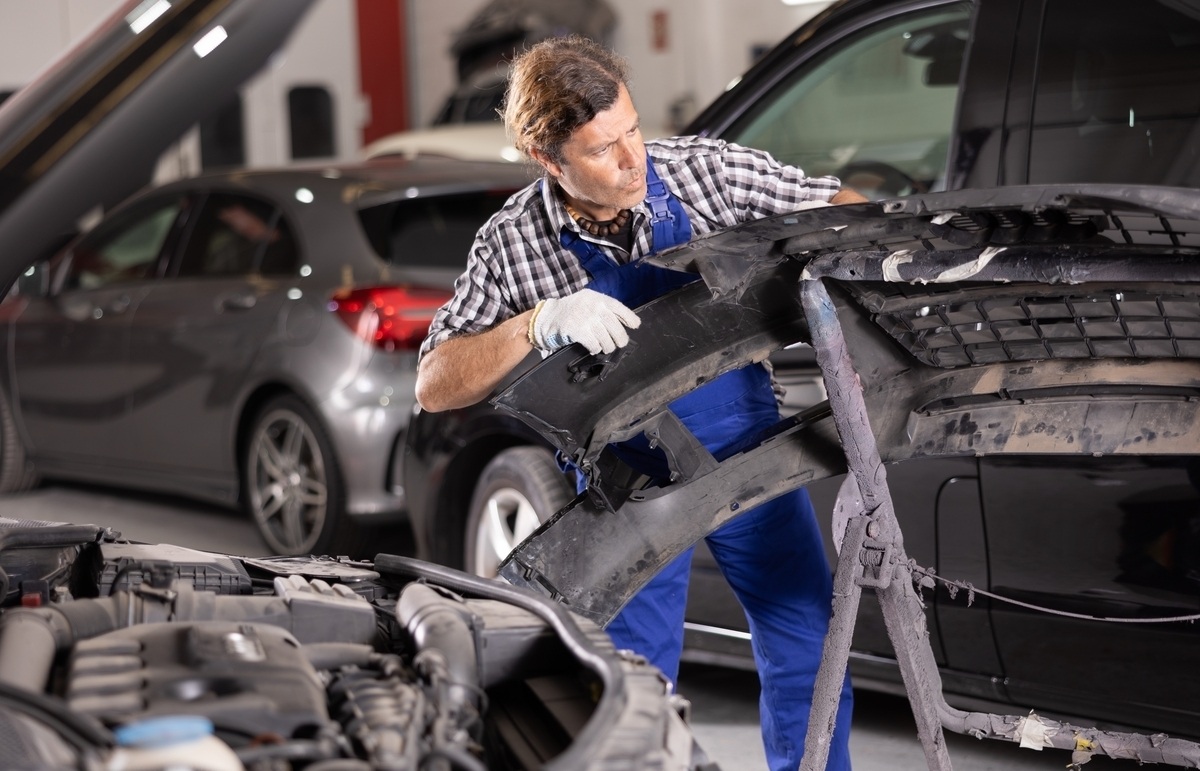
Bumper replacement means removing the entire damaged bumper cover and installing a new one. Replacement is required when the damage is too extensive to repair, when the cover has structural cracks that span mounting points, or when the underlying components need to be accessed and addressed.
Replacement typically also involves repainting or color matching the new cover to the vehicle’s existing finish.
The choice between bumper repair and replacement is not always straightforward. A shop that does not remove the cover to inspect the underlying components may miss damage that makes repair an incomplete solution.
4. When Repair Is the Right Choice
Repair is a legitimate and cost-effective option when the damage meets specific criteria. Not every scuff or scratch warrants a full replacement, and understanding when repair is appropriate saves money without compromising safety.
Repair is generally suitable when:
- The damage is localized to a section of the bumper cover rather than spread across the full width
- The bumper cover retains its shape and mounting integrity in the undamaged areas
- No cracks extend through the mounting tabs or brackets that connect the cover to the vehicle
- The energy absorber and reinforcement bar behind the cover are undamaged
- The color and finish can be matched accurately to the vehicle
A repair that addresses the visible damage but leaves hidden structural issues unresolved is not a complete repair. The assessment step, including removal of the cover if necessary, is what determines whether repair is genuinely appropriate.
5. When Replacement Becomes Necessary
Some forms of bumper damage cannot be repaired to a standard that restores both appearance and function. Replacement is the correct solution in these situations.
Replacement is typically required when:
- Cracks extend across the full face of the cover or through mounting points
- Sections of the cover are missing entirely
- The bumper cover has been pushed inward to a degree that distorted the energy absorber
- The reinforcement bar shows bending or deformation
- Sensor housings built into the bumper were damaged or dislodged
- A previous repair created a surface that can no longer accept filler or paint correctly
Modern vehicles increasingly integrate sensors, cameras, and parking assistance systems into the bumper assembly. Damage to these components may require recalibration or replacement of sensor units in addition to the bumper cover itself. This is a detail that affects the cost and scope of replacement significantly.
According to the NY DMV Know Your Rights in Auto Repair, registered repair shops in New York are required to provide a written estimate that lists each part and its cost before beginning any work. Requesting this itemized estimate before authorizing bumper repair and replacement work gives drivers a clear picture of what is being replaced and why.
6. How Parts Type Affects the Outcome
When bumper replacement is required, the type of parts used directly affects the quality and longevity of the result. There are three categories of bumper covers available:
OEM Parts
Original Equipment Manufacturer parts are produced by the vehicle’s manufacturer to the same specifications as the original component. OEM bumper covers are engineered to the correct dimensions, mounting points, and finish specifications for the specific vehicle.
OEM parts provide the most reliable fit and the best foundation for paint matching. They are also the standard that insurance companies are increasingly required to consider under certain state regulations.
Aftermarket Parts
Aftermarket bumper covers are produced by third-party manufacturers. Quality varies significantly across aftermarket suppliers. Some aftermarket parts perform comparably to OEM in fit and finish. Others have dimensional differences that create alignment issues, inconsistent panel gaps, or paint adhesion problems.
Recycled or Salvage Parts
Recycled bumper covers are sourced from vehicles that were declared total losses. They may be in good condition with appropriate color matches for common vehicles, but their history is unknown. Paint adhesion from a previous respray may affect how they accept new paint.
For a deeper understanding of how parts choices affect the overall quality of a repair, the body work and car repair service page covers the standards used at a professional level.
7. What the Bumper Repair and Replacement Process Involves
Whether a bumper is being repaired or replaced, a professional body work process follows a defined sequence of steps that ensures the result is both visually correct and structurally sound.
For bumper repair:
- The bumper cover is removed from the vehicle
- The underlying components are inspected for damage
- The repair technique appropriate to the damage type is applied
- The repaired area is sanded, primed, and prepared for paint
- Color is matched using computerized paint mixing systems
- The cover is painted and clear-coated
- The cover is reinstalled and all sensors or trim are reconnected and tested
For bumper replacement:
- The damaged cover and any damaged underlying components are removed
- New parts are prepared, primed, and painted to match the vehicle
- The new cover is installed with correct torque and alignment
- All sensors, cameras, and trim pieces are transferred or replaced
- Any sensor recalibration required by the vehicle manufacturer is performed
- The final result is inspected for fit, alignment, and color match
The paint matching step is one of the most technically demanding parts of any bumper repair and replacement job. A color that looks correct in the shop may drift under different lighting conditions if the mixing and application process was not executed precisely.
8. How Bumper Damage Affects Your Insurance Claim
Bumper damage is one of the most common subjects of collision insurance claims. Understanding how the claims process relates to bumper repair and replacement helps drivers navigate it more effectively.
Most collision policies cover bumper damage when the cause is a covered event. The insurance adjuster’s estimate may recommend repair in situations where a thorough inspection would indicate replacement is more appropriate. Drivers have the right to request a second assessment.
New York State regulations govern how insurance companies handle parts in covered repairs. According to the NY DMV Vehicle Safety Inspection Program, all vehicles registered in New York must pass an annual safety inspection that includes checks of exterior components and safety systems. A bumper that does not meet fit, function, or safety standards after a repair may affect a vehicle’s ability to pass this inspection.
Key points for navigating a bumper-related insurance claim:
- Request a written estimate before authorizing any work
- Ask specifically whether all underlying components were inspected
- Confirm what type of parts the estimate includes
- If the insurer recommends aftermarket parts, ask whether OEM parts are available for your vehicle and coverage
- Keep all documentation including the estimate, the work order, and the final invoice
For more context on how the repair process connects to resale value and documentation, the auto body repair and resale value guide covers what buyers and insurers look for when evaluating a repaired vehicle.
9. Frequently Asked Questions
Not always. Small, localized cracks can often be repaired using plastic welding and filler techniques. Cracks that run through mounting tabs, extend across the full face of the cover, or affect the structural integrity of the bumper system typically require replacement. A proper assessment with the cover removed is the only reliable way to determine which approach is appropriate.
A properly executed repair using computerized color matching should produce a result that is very close to the original. However, paint can shift slightly over time due to UV exposure and environmental factors. The match is typically most accurate immediately after the repair and may show slight variation as the vehicle ages.
A straightforward bumper repair typically takes one to two days including paint curing time. A full replacement that requires painting, sensor installation, and recalibration may take two to three days. The timeline can extend if parts need to be ordered or if additional hidden damage is found during the inspection.
Not necessarily. Minor cosmetic damage may cost less to repair out of pocket than a deductible, and filing a claim could affect future premiums depending on the policy. Comparing the repair estimate to the deductible and considering the impact on future premiums is worth doing before filing.
Sensors embedded in bumpers for parking assistance, automatic braking, or collision warning systems must be replaced and recalibrated after any damage or replacement. Operating a vehicle with non-functional safety sensors creates a false sense of security and may affect how the vehicle performs in a future incident.
Minor cosmetic damage that does not affect mounting or underlying components is generally safe for short-term driving. However, a bumper that is partially detached, missing sections, or has compromised underlying components should be addressed before driving routinely. For a full picture of what professional auto body shop in Brooklyn NY repair involves from assessment through to completion, that resource walks through the full process.
10. Making the Right Call
Bumper repair and replacement decisions come down to one core question: does the result restore both the appearance and the function of the bumper system to the standard required for safe driving?
A bumper that looks correct but was repaired without inspecting the underlying components is not a complete repair. A replacement that uses parts with poor dimensional accuracy creates alignment and paint problems that compound over time.
Drivers who understand what bumper repair and replacement actually involves are in a far stronger position when dealing with a repair shop or an insurance adjuster. The decisions that matter are made before the work begins, not after.
💡 Key Takeaways
- Bumper damage is not always cosmetic. The energy absorber and reinforcement bar behind the cover can be compromised without being visible from outside the vehicle
- Bumper repair and replacement are distinct approaches that apply to different types and degrees of damage. The right choice depends on a proper assessment, not a visual check
- Repair is appropriate when damage is localized, mounting integrity is intact, and underlying components are undamaged
- Replacement is required when cracks extend through mounting points, underlying components were damaged, or sensors need to be addressed
- OEM parts provide the most reliable fit and paint match. Aftermarket quality varies significantly across manufacturers
- Insurance claims for bumper damage require the same documentation discipline as any other repair. Written estimates and itemized invoices protect drivers throughout the process
- All sensors and safety systems integrated into the bumper must be recalibrated after any replacement
HAVE QUESTIONS ABOUT BUMPER REPAIR OR REPLACEMENT?
Understanding what bumper damage actually involves helps drivers make better decisions after a collision or impact. If you have questions about the assessment or repair process, our team is available to help.
References
- National Highway Traffic Safety Administration — Vehicle Safety: https://www.nhtsa.gov/vehicle-safety
- NY DMV — Know Your Rights in Auto Repair: https://dmv.ny.gov/know-your-rights-in-auto-repair
- NY DMV — Vehicle Safety and Emissions Inspection Program: https://dmv.ny.gov/new-york-state-vehicle-safetyemissions-inspection-program