

Table of Contents
- 1. Why Rollover Damage Is Unlike Any Other Collision
- 2. What Auto Body Shop Rollover Repair Involves
- 3. How the Structural Damage Is Mapped and Measured
- 4. Roof and Pillar Repair After a Rollover
- 5. Glass, Seals, and Weatherproofing After a Rollover
- 6. Mechanical and Electrical Systems in a Rollover Event
- 7. Safety System Replacement After a Rollover
- 8. When a Rollover Vehicle Cannot Be Restored
- 9. Frequently Asked Questions
- 10. What Restoration Actually Requires
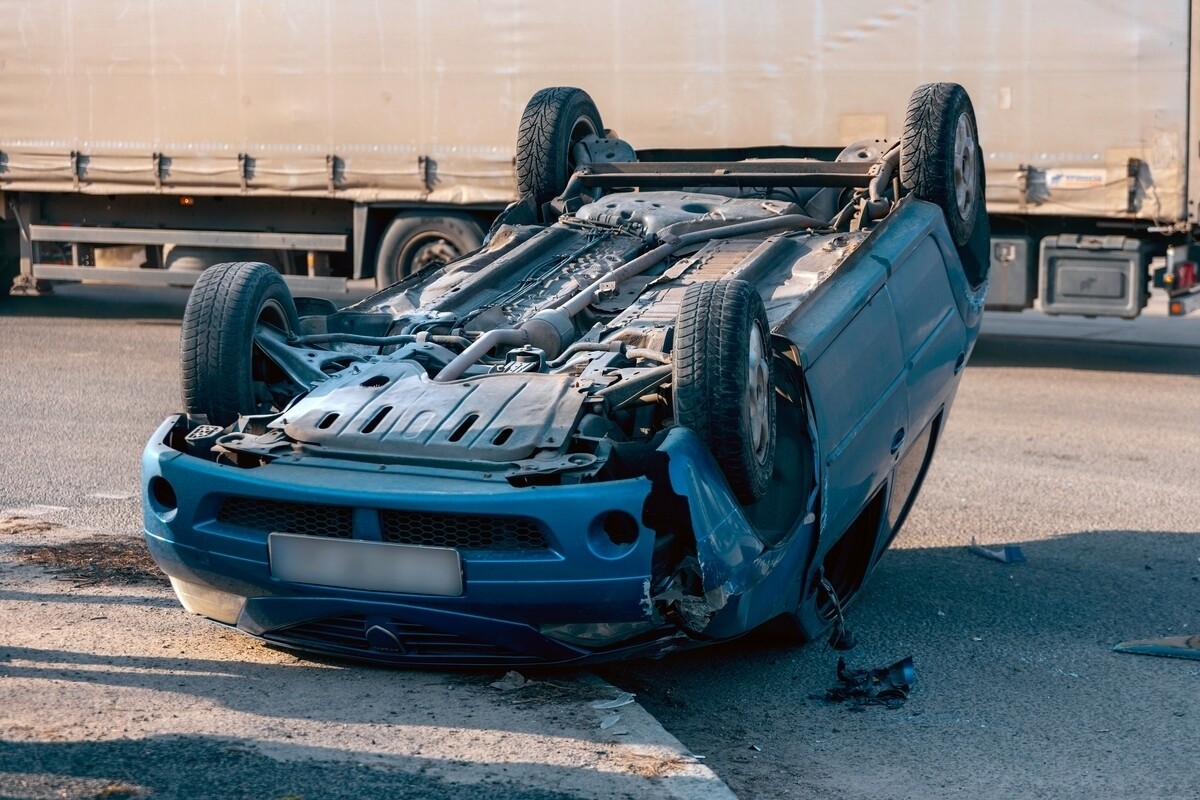
A rollover is one of the most structurally demanding events a vehicle can experience. Unlike a standard front or rear impact, a rollover subjects the vehicle to forces from multiple angles as it tips, rotates, and contacts the ground repeatedly.
Auto body shop rollover repair is a complex, multi-system process that goes well beyond panel replacement and paint.
This guide covers what a qualified auto body shop does to restore a vehicle after a rollover, why the damage is so extensive, and what drivers should understand before authorizing this type of repair.
1. Why Rollover Damage Is Unlike Any Other Collision
Most collision types have a primary impact zone. A front-end crash concentrates force along the front rails and engine cradle. A rear impact targets the trunk and rear subframe. Rollovers are different.
When a vehicle rolls, every structural zone absorbs force at some point in the sequence:
- The roof pillars compress as the roof contacts the ground
- The door frames distort as the vehicle’s weight shifts laterally
- The rocker panels and floor structure absorb load from the ground contact points
- The suspension components on both sides experience stress as weight moves in directions they were not designed to handle
Auto body shop rollover repair must account for damage spread across the entire vehicle structure. This is what makes rollover restoration one of the most technically demanding categories of collision work a facility handles.
2. What Auto Body Shop Rollover Repair Involves
Auto body shop rollover repair covers every system and structural zone the rollover affected. The scope is broader than a standard collision repair.
It typically involves all of the following:
- Full structural measurement — mapping the vehicle’s dimensions against factory specifications to identify every displaced zone
- Roof and pillar repair or replacement — addressing compression damage to the A, B, and C pillars and the roof panel
- Rocker panel and floor structure repair — correcting distortion in the lower body structure that absorbed lateral and rotational force
- Door frame realignment — restoring door openings to original geometry so replacement doors and glass seal correctly
- Glass replacement — all glazing is typically shattered or cracked and requires full replacement
- Mechanical system inspection — evaluating suspension, steering, cooling, and drivetrain components for damage
- Electrical and sensor system repair — addressing wiring damage, module faults, and ADAS sensor displacement
- Safety system replacement — replacing all deployed airbags, pretensioners, and crash-triggered safety components
- Paint and refinishing — repainting every affected panel with correct color matching and clear coat
Each of these requires different skills and different equipment. A shop that cannot address all of them cannot complete a rollover restoration to a professional standard.
3. How the Structural Damage Is Mapped and Measured
The first step in any auto body shop rollover repair is a complete structural measurement. This step is more critical in a rollover than in most other collision types. The damage is distributed across the entire vehicle, not concentrated in one area.
Computerized measuring systems compare hundreds of dimensional points across the frame, pillars, floor, and body structure to manufacturer specifications. The measurement identifies:
- Which structural zones were displaced and by how much
- The sequence of repairs needed to restore factory geometry without creating new misalignment
- Whether any structural sections require replacement rather than straightening
- The reference points used to verify the repair once it is complete
A rollover that appears to have caused only cosmetic damage frequently conceals significant structural distortion. Scratches, broken glass, and dented panels are visible. The underlying displacement often is not. Beginning a repair without structural measurement data leads to incomplete corrections and a vehicle that handles incorrectly after delivery.
According to the National Highway Traffic Safety Administration, vehicle structural integrity is a fundamental element of occupant protection in a crash. NHTSA specifically tests vehicles for rollover resistance because the forces involved directly affect how well the roof structure protects occupants. A restored vehicle must meet those same structural standards.
4. Roof and Pillar Repair After a Rollover
The roof and its supporting pillars absorb the most concentrated force in a rollover. The A pillars at the windshield, the B pillars at the center, and the C pillars at the rear are engineered to maintain a survival space for occupants during a roof crush event.
When damaged in a rollover, the repair approach depends on the severity of the distortion.
Straightening
Minor pillar displacement within manufacturer tolerances can be corrected using controlled hydraulic force and continuous dimensional measurement. The pillar returns to factory geometry while adjacent measurement points are monitored to avoid secondary distortion.
Sectioning
When a pillar has been compressed beyond the range where straightening can return it to specification, sectioning replaces the damaged portion with new metal. This procedure follows manufacturer-specific guidelines defining cut locations, overlap requirements, and weld procedures.
Full replacement
In severe rollovers where multiple pillars are structurally compromised, full replacement of roof components may be required. This is the most involved structural repair and requires careful attention to sequencing to maintain vehicle geometry throughout.
For a complete picture of how frame and structural repair works in a post-collision context, the frame straightening service page covers the equipment and process used at a professional level.
5. Glass, Seals, and Weatherproofing After a Rollover
Virtually all glass in a rollover vehicle requires replacement. The forces involved shatter tempered glass, crack laminated windshields, and displace glass from its frame even when it remains visually intact. Installing displaced glass into a distorted frame without first correcting the geometry results in glass that does not seal correctly.
The glass replacement sequence follows the structural work:
- All glass is removed early in the repair to allow full access to the pillars and roof structure
- New glass is not installed until structural corrections are complete and verified
- Urethane adhesive and trim are installed after the structural geometry is confirmed
- All seals and weatherstripping are replaced rather than reused, as the distortion they absorbed compromises their ability to create a watertight seal
A vehicle returned with improperly sealed glass will develop water leaks. These leaks cause interior damage and accelerate corrosion of the floor structure and lower pillars over time.
According to the NY DMV Know Your Rights in Auto Repair, registered repair shops in New York must provide a written estimate covering every component being repaired. In a rollover repair, this estimate should separately identify all glass, all seals, and all structural components being replaced.
6. Mechanical and Electrical Systems in a Rollover Event
The force distribution in a rollover affects mechanical and electrical systems throughout the vehicle. Auto body shop rollover repair includes diagnosing and addressing these systems as part of the complete restoration.
Suspension
Both sides of the suspension absorb abnormal loads during a rollover. Control arms, ball joints, tie rods, and wheel bearings on both sides require inspection. Components that absorbed direct ground impact require particular attention.
Steering
The steering rack and its mounting points can be displaced when the subframe shifts. Steering components that appeared functional before the rollover may produce alignment issues or handling instability after the structural repair if they are not also assessed.
Cooling and fluid systems
Rollovers frequently cause fluid spills and hose displacements. Coolant, oil, and power steering fluid leaks that were not immediately apparent may become visible once the vehicle is upright and running. A complete fluid system inspection is standard in every rollover repair.
Electrical systems
A rollover that deforms structural channels also deforms the wiring routed through them. Harness damage, connector displacement, and module faults from voltage irregularities all require systematic diagnosis. For a detailed overview of what this electrical assessment involves, the blog on auto body shop electrical repair covers the full diagnostic process.
7. Safety System Replacement After a Rollover
Modern vehicles deploy multiple safety systems during a rollover. Side curtain airbags deploy from the roofline to protect occupants’ heads. Seatbelt pretensioners fire during the event. The airbag control module records crash data and must be replaced or reprogrammed afterward.
All of these components require replacement after a rollover:
- Side curtain airbags — deploy from the headliner along the roofline and must be replaced with new units
- Front airbags — may deploy if a frontal impact occurred as part of the rollover sequence
- Seatbelt pretensioners — all pretensioners that fired must be replaced, not just visually inspected
- Airbag control module — must be replaced or reprogrammed to clear crash event data and restore system function
- Rollover sensors — gyroscopic sensors that triggered curtain airbag deployment may require replacement depending on their design
A vehicle returned after a rollover with any of these components unaddressed has no side curtain protection in a future rollover event. This is one of the most safety-critical aspects of auto body shop rollover repair.
8. When a Rollover Vehicle Cannot Be Restored
Not every vehicle that has been through a rollover can be restored to a safe and roadworthy condition. The determination depends on the extent of structural distortion and the availability of manufacturer-approved repair procedures for the specific damage found.
Factors that typically indicate a vehicle cannot be fully restored:
- Pillar compression exceeding the manufacturer’s allowable straightening range that cannot be corrected through sectioning
- Floor pan deformation affecting multiple structural load paths simultaneously
- Damage to hydroformed structural rails that makes factory geometry unachievable
- Insurance total loss determination based on repair cost exceeding a defined percentage of the vehicle’s value
When a vehicle is determined to be restorable, the repair must be completed to manufacturer specifications and verified through post-repair structural measurement.
According to the NY DMV Vehicle Safety Inspection Program, all vehicles registered in New York must pass an annual safety inspection that includes structural, glass, lighting, and safety system checks. A rollover repair completed correctly and documented fully should produce a vehicle that meets every inspection item.
For a professional facility in South Brooklyn that handles structural collision repair, the auto body shop in Brooklyn NY page covers the full scope of services and standards.
9. Frequently Asked Questions
Not always. Rollovers produce a higher rate of total loss determinations than most other collision types because structural damage is often extensive and repair cost is high. The outcome depends on the specific vehicle, the severity of the rollover, and the insurer’s total loss threshold for that vehicle’s value.
A complete rollover restoration is among the most time-consuming types of collision repair. Depending on structural damage, parts availability, and whether sectioning or replacement of major structural components is required, a thorough repair can take several weeks. Shortcuts that reduce this timeline typically mean not all systems have been fully addressed.
Yes, provided the repair was performed to manufacturer specifications, verified through post-repair structural measurement, and all safety systems were fully replaced. A repair that was not fully measured and verified may appear correct but may not provide the structural protection the vehicle was designed to deliver.
If an insurance claim was filed, the rollover event will typically appear on vehicle history reports. A well-documented repair with structural measurement records and complete safety system replacement documentation is in a much stronger position at resale than one with no supporting paperwork.
Ask whether computerized structural measurement will be performed before and after the structural work. Ask which pillars will be straightened versus sectioned or replaced. Ask whether all deployed safety systems will be replaced. Ask what documentation you will receive and what warranty covers the structural work.
Collision coverage typically covers rollover damage. Comprehensive coverage may apply if the rollover was caused by a non-collision event such as wind or a road hazard. The specific coverage depends on the policy. Filing promptly and providing a complete damage assessment from a qualified shop supports the approval process.
10. What Restoration Actually Requires
Auto body shop rollover repair requires more from a facility than almost any other type of collision work. It demands structural measurement capability, roof and pillar repair expertise, complete safety system replacement knowledge, and the ability to coordinate all of these in the correct sequence.
A vehicle that has gone through a thorough auto body shop rollover repair should be structurally sound, electrically functional, and fully equipped with operational safety systems.
Understanding what that process involves, before the authorization is signed, is the most practical protection a driver has when faced with this type of repair decision.
💡 Key Takeaways
- A rollover subjects every structural zone of the vehicle to force, making auto body shop rollover repair more complex than most other collision types
- A complete structural measurement must be performed before and after all structural work to verify that factory geometry has been restored
- Roof pillars may require straightening, sectioning, or full replacement depending on the severity of compression damage
- All glass must be replaced and installed only after structural corrections are complete to ensure proper sealing
- Both sides of the suspension, the steering system, and all fluid systems require inspection after a rollover
- All deployed safety systems including side curtain airbags, pretensioners, and the airbag control module must be replaced
- Not every rollover vehicle can be restored, manufacturer repair limits and total loss thresholds determine whether restoration is viable
- Under New York’s Repair Shop Act, drivers have the right to a written estimate and 90 days or 3,000 miles to request correction of any repair defect
HAVE QUESTIONS ABOUT RESTORING A VEHICLE AFTER A ROLLOVER?
Understanding what auto body shop rollover repair involves helps drivers ask informed questions and make better decisions about this complex type of repair. If you have questions about the restoration process or what a complete rollover repair should include, our team is available to help.
References
- National Highway Traffic Safety Administration — Vehicle Safety: https://www.nhtsa.gov/vehicle-safety
- NY DMV — Know Your Rights in Auto Repair: https://dmv.ny.gov/know-your-rights-in-auto-repair
- NY DMV — Vehicle Safety and Emissions Inspection Program: https://dmv.ny.gov/new-york-state-vehicle-safetyemissions-inspection-program