

Table of Contents
- 1. Why Floodwater Harms a Car Differently Than a Crash
- 2. What Water Reaches Inside a Flooded Vehicle
- 3. What to Do Before the Car Is Moved
- 4. How Body Shop Flood Damage Repair Starts With Inspection
- 5. Drying, Cleaning, and Interior Restoration
- 6. Wiring, Modules, and Airbag System Testing
- 7. Engine, Transmission, and Brake Checks
- 8. Insurance Claims, Total Loss, and Title Status
- 9. Frequently Asked Questions
- 10. Making Sense of a Flooded Car Repair Plan
A car that sat in rising water can look fine once the water drains away. The seats may dry, the dashboard may light up, and the engine may even turn over. But body shop flood damage repair deals with problems hidden behind panels, under carpet, and inside sealed electrical parts.
Floodwater carries mud, salt, and dirt into places a car was never built to get wet. This guide explains what happens to a car in a flood and how a shop checks it. It also covers what drivers should know before approving work.
1. Why Floodwater Harms a Car Differently Than a Crash
A collision bends metal. Floodwater does something less visible. It soaks and corrodes parts over time. The harm can keep growing after the water is gone.
Several things set flooding apart from impact damage:
- Water reaches parts that a crash would never touch
- The harm often shows up days or weeks later
- Salt water and dirty runoff speed up corrosion
- Electrical faults can appear at random and then disappear
The damage is spread through the whole car. So body shop flood damage repair is usually judged by how high the water rose. A car with wet carpet is a very different job than a car with water over the dashboard.
Water depth matters, but so does time. A car that sits wet for days faces more corrosion than one dried out quickly.
2. What Water Reaches Inside a Flooded Vehicle
Water finds its way into more areas than most drivers expect. A careful evaluation looks at each of these systems:
- Interior: Carpet, padding, seat foam, door panels, and headliner can trap water and grow mold
- Wiring and connectors: Moisture and grit can corrode terminals and cause shorts
- Control modules: Computers for the engine, brakes, airbags, and lighting may sit low in the cabin or under the dash
- Powertrain: Engine intake, transmission, and differentials can take on water through vents and seals
- Fluids: Oil, coolant, brake fluid, and transmission fluid can be contaminated
- Lights and sensors: Headlamp housings, cameras, and parking sensors can fill with moisture
Electrical parts are often the hardest to judge. Shops trace hidden wiring and module faults as described in how an auto body shop handles electrical repairs after a crash. Flood work uses many of the same steps.
3. What to Do Before the Car Is Moved
What a driver does right after a flood affects safety and the outcome of body shop flood damage repair. The most important rule is simple. Do not try to start a car that has taken on water.
Starting the engine can pull water into the cylinders and cause serious internal damage. It can also send power through wet circuits.
Before the vehicle is moved, these steps help:
- Take photos of the water line inside and outside the car
- Note the date, location, and how long the car sat in water
- Avoid turning the key or pressing the start button
- Keep receipts and paperwork for any towing
- Contact the insurer to report the loss
The insurer will usually open a claim and ask for those records. The steps are outlined on the insurance claims page. Photos taken early make the later estimate easier to support.
Vehicles that were in deep or salty water are usually towed rather than driven. Moving them on a flatbed avoids putting more strain on wet parts.
4. How Body Shop Flood Damage Repair Starts With Inspection
The work begins with a long inspection, not a quick estimate. The goal is to find out how far the water went and which parts it reached.
Technicians usually check for:
- The height of the water line on the doors, seats, and dash
- Silt, sand, or debris under the seats and in the trunk
- Rust on seat tracks, pedals, and door hardware
- Moisture inside lamps and behind trim panels
- Fluids that look milky, cloudy, or gritty
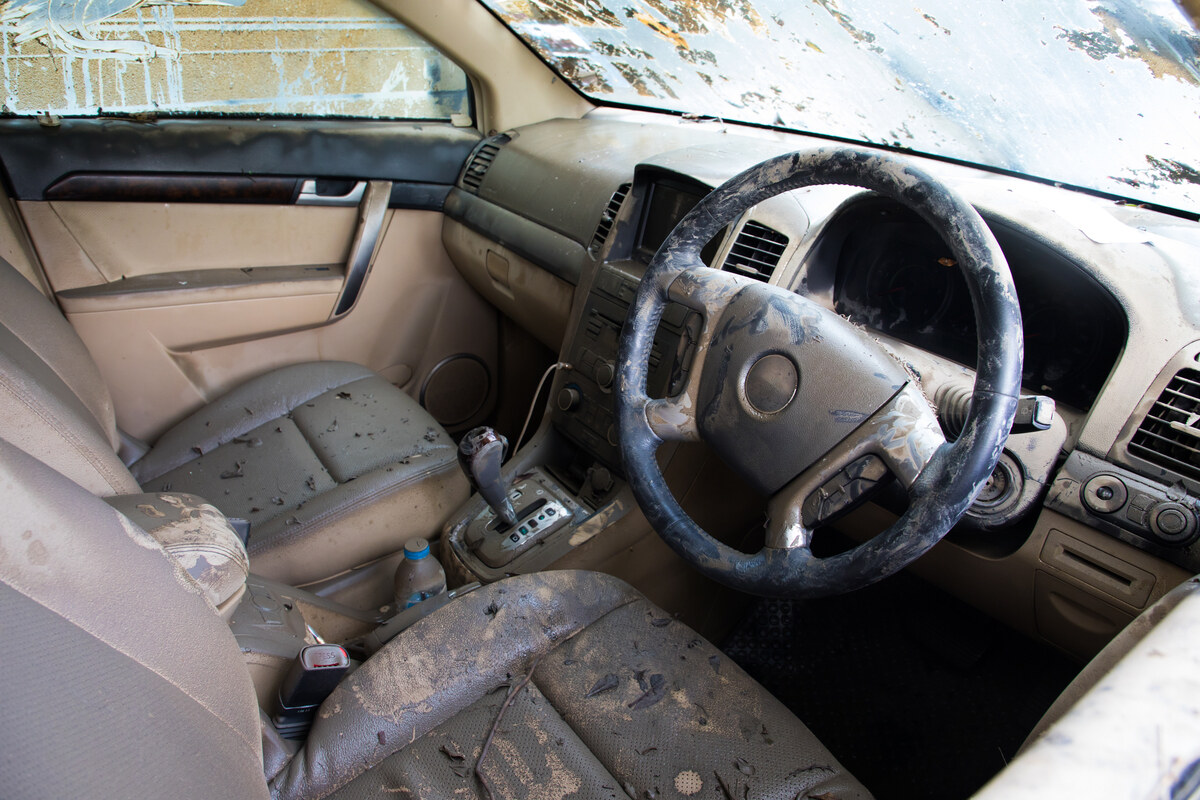
According to the Federal Trade Commission, flood damage often leaves mud or sand under the seats or dashboard. Other signs include rust around the doors, loose or stained carpet, and a smell of mold or strong cleaning products.
The agency also notes that water can slowly destroy mechanical and electrical systems. That is why a shop looks beyond what is easy to see.
Everything found is written down. That list becomes the base for the estimate and the insurance review.
5. Drying, Cleaning, and Interior Restoration
Once the inspection is complete, the next stage is drying and cleaning. This is the slowest part of body shop flood damage repair. Rushing it can lead to mold and lingering odors.
Carpet and padding
Water settles into the padding beneath the carpet and stays there. Technicians often remove the seats and carpet entirely so the floor pan can dry. Padding that has soaked up dirty water is commonly replaced rather than cleaned.
Seats and trim
Seat foam holds moisture for a long time. Leather and fabric may be cleaned, treated, or replaced depending on how long they stayed wet. Door panels and headliners are checked for swelling and stains.
Odor and mold control
Mold can start within a day or two in warm, damp conditions. Drying equipment, air movement, and cleaning treatments are used to remove moisture. If an odor remains after drying, it usually means water is still trapped somewhere.
Leaving damp material in place may hide the problem for a while. It tends to come back as a musty smell or fogged windows.
6. Wiring, Modules, and Airbag System Testing
Electrical systems are where body shop flood damage repair becomes most technical. Modern cars rely on many computers and long runs of wiring, and water can damage any of it.
According to the New York State DMV, flood damage can affect the engine or transmission and corrode wiring. It can also harm the airbag and impair the vehicle’s computers. Each of these matters for safety.
A thorough electrical review often includes:
- A full scan for fault codes across all control modules
- Visual checks of connectors for green or white corrosion
- Testing of lights, windows, locks, and wipers
- Inspection of airbag modules and seat sensors, which often sit low in the cabin
- Checks of cameras and driver assistance sensors
Airbag and safety systems deserve special care. A module that has been wet may fail without warning, or it may deploy incorrectly. Many shops replace affected safety components instead of trusting them after water exposure.
Some electrical faults take time to appear. Corrosion can keep spreading inside a connector long after the car has dried.
7. Engine, Transmission, and Brake Checks
Mechanical checks are a core part of body shop flood damage repair. Water can enter through vents, seals, and the intake system.
The mechanical review usually covers:
- Engine: Oil is checked for water, and the intake path is inspected before any start attempt
- Transmission and differentials: Fluid is tested for moisture, since water breaks down lubrication
- Brakes: Rotors, calipers, and brake fluid are inspected for rust and contamination
- Fuel system: Fuel can be contaminated with water or debris
- Suspension and bearings: Wheel bearings and joints may need fresh grease after submersion
If any fluid looks milky or gritty, it needs to be drained and replaced. In some cases the damage has spread far enough that a repair no longer makes sense.
A vehicle can seem to run well after a flood and still carry hidden wear. That is why mechanical checks come before any final sign-off.
8. Insurance Claims, Total Loss, and Title Status
Body shop flood damage repair is usually paid through comprehensive coverage, not collision coverage. According to the New York State Department of Financial Services, comprehensive coverage pays for damage from causes other than collision. Flood and windstorm are named examples. A deductible usually applies.
Two outcomes are common after the insurer reviews the estimate:
- Repair: The cost to restore the vehicle is reasonable compared with its value
- Total loss: The cost to repair is too close to the vehicle’s value, so the insurer pays out instead
Deep water often leads to a total loss, because so many systems are affected at once. A vehicle declared a total loss may be given a salvage title. If it is repaired and returned to the road later, New York marks it on the title as rebuilt salvage.
Questions worth settling before repairs begin:
- Which systems were checked and which were replaced?
- Was a full electrical scan completed and documented?
- Were the airbag and safety components inspected or replaced?
- Is the estimate likely to grow once drying and teardown are complete?
9. Frequently Asked Questions
It is not recommended. Even if the car starts, hidden water in the engine, fluids, and wiring can cause damage or a safety failure. A professional inspection should come first.
The timeline depends on how high the water rose and how many systems were affected. Drying alone can take days. Electrical testing and parts orders add more time. So body shop flood damage repair often takes longer than a collision repair.
Comprehensive coverage typically covers flood damage, subject to the deductible and policy terms. Collision-only policies generally do not. Reading the policy or asking the insurer is the best way to confirm.
Often yes. Flood history can lower a vehicle’s value, and a salvage or rebuilt title lowers it further. Keeping inspection records and repair documents helps show what was done.
Yes. Salt water speeds up corrosion, so the harm can spread faster. Shops look more closely at wiring, brakes, and metal parts after salt water. This is a real concern near the coast.
Coastal areas face a higher risk of storm surge and tidal flooding. A local auto body shop near Coney Island can evaluate a water-damaged vehicle and explain the scope of repair.
10. Making Sense of a Flooded Car Repair Plan
A flooded car is a long-term problem, not just a cleanup job. The visible mess is only the start. Wiring, modules, fluids, and safety systems all need to be checked before the car is trusted again.
Comparing repair plans is easier when each one lists the same items: how the interior will be dried, which parts will be replaced, and how the electrical and airbag systems will be tested. Differences in cost often reflect differences in how much was checked.
The strongest protection is acting early. Document the damage, avoid starting the engine, and let a full inspection guide the decision. Good records also help body shop flood damage repair move smoothly if the insurance process becomes complicated.
💡 Key Takeaways
- Floodwater harms a car by soaking, corroding, and contaminating parts over time
- Never start a car that has taken on water until it has been inspected
- Photos and notes taken before the car is moved support the insurance claim
- Inspection starts with the water line, then moves to the interior, electrical, and mechanical systems
- Interiors need full drying, and soaked padding is often replaced
- Wiring, control modules, and airbag systems need scanning and careful testing
- Comprehensive coverage typically handles flood damage, and deep water often leads to a total loss
- Rebuilt salvage status and flood history can lower resale value
NOT SURE HOW FAR FLOOD DAMAGE HAS SPREAD IN YOUR CAR?
Knowing how body shop flood damage repair is scoped makes it easier to judge an estimate. If you want help understanding which systems need testing and which parts may need replacing, you can contact us.
References
- NY DFS: Auto Insurance Information for Consumers: https://www.dfs.ny.gov/consumers/auto_insurance
- NY DMV: Beware of Flood Damage Before Buying Used Vehicles: https://dmv.ny.gov/news/dmv-reminds-new-yorkers-to-beware-of-flood-damage-before-buying-used-vehicles
- FTC: How to Steer Clear of a Flood-Damaged Car: https://www.consumer.ftc.gov/consumer-alerts/2022/11/how-steer-clear-flood-damaged-car