

Table of Contents
- 1. Why Auto Glass Belongs at an Auto Body Shop
- 2. What Auto Body Shop Glass Replacement Actually Covers
- 3. How Glass Damage Is Assessed Before Work Begins
- 4. When Repair Is Appropriate and When Replacement Is Required
- 5. The Auto Body Shop Glass Replacement Process Step by Step
- 6. ADAS Calibration: The Step Most Drivers Don't Know About
- 7. How Glass Type and Quality Affect the Outcome
- 8. What New York's Annual Inspection Requires of Glass Condition
- 9. Frequently Asked Questions
- 10. Choosing the Right Place for Glass Work
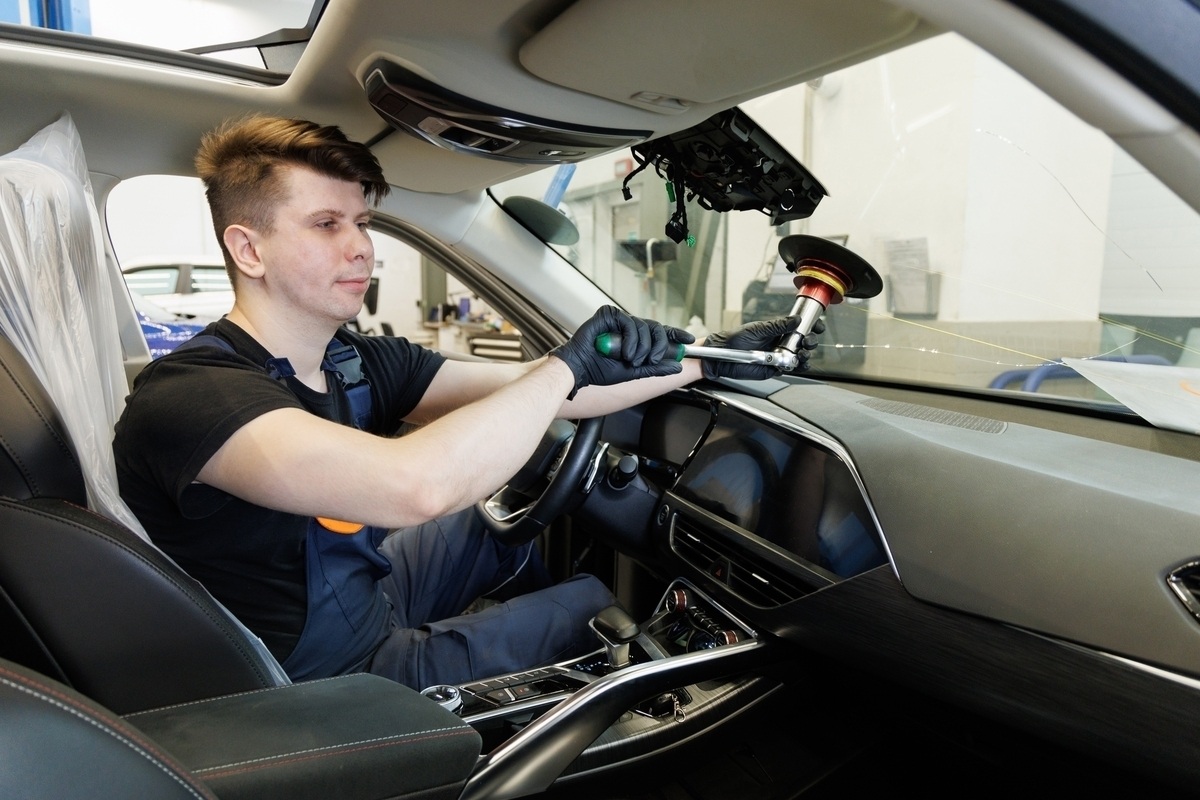
When a vehicle’s glass is cracked, chipped, or shattered, most drivers think of a dedicated glass service rather than a body shop. In many cases, auto body shop glass replacement is the more appropriate choice. This is especially true when the damage occurred in a collision or when the glass is connected to safety systems in the vehicle.
This guide covers what an auto body shop handles for glass work, why the process involves more than most drivers expect, and what to ask before authorizing any glass repair or replacement.
1. Why Auto Glass Belongs at an Auto Body Shop
Glass damage rarely occurs in isolation from the rest of the vehicle. A stone chip on an otherwise undamaged windshield can be handled by a standalone glass service. Damage from a collision is different.
When a vehicle has been in a crash, the glass may be part of a larger picture that includes body panel damage, structural concerns, or sensor misalignment. An auto body shop that handles the full scope of collision repair evaluates the glass alongside everything else that was affected.
There are also vehicle-specific reasons that make a body shop the better choice:
- Vehicles with advanced driver assistance systems require sensor recalibration after any windshield replacement
- A windshield displaced in a collision may have damaged the surrounding trim and molding that holds it in place
- Rear glass damage in a collision may involve damage to the surrounding body structure that needs to be addressed before new glass can be properly sealed
- Side glass damage on a door may be connected to door frame distortion that affects how replacement glass seats and seals
Auto body shop glass replacement addresses the glass in the context of the vehicle as a whole, not as a standalone component.
2. What Auto Body Shop Glass Replacement Actually Covers
Auto body shop glass replacement covers every glass surface on a vehicle, not just the windshield.
The glass components a body shop handles include:
- Windshield — the front glass that provides structural support, vision, and mounting for driver assistance sensors and cameras
- Rear glass — the back window, which may be heated, integrated with a defroster element, or fitted with a rear wiper
- Side door glass — front and rear door windows that run in tracks and may include privacy tinting or heating elements
- Quarter glass — fixed panes at the rear sides of the vehicle, commonly found on sedans and SUVs
- Sunroof and panoramic roof glass — overhead panels that require precise sealing and drainage channel integrity
- Mirrors with integrated elements — outer mirror glass that in modern vehicles may include sensors or defrost circuits
Each type involves its own removal, preparation, and installation requirements. Treating all glass work as a single standardized process leads to shortcuts. A qualified body shop approaches each type based on its specific requirements.
For a full picture of what a professional auto glass service covers at a qualified facility, that resource outlines the range of glass work handled in a proper collision repair environment.
3. How Glass Damage Is Assessed Before Work Begins
Before any glass work starts, a qualified technician evaluates the damage to determine what is actually needed. This assessment step is what distinguishes a proper repair from a rushed one.
In an auto body shop glass replacement assessment, the technician looks at:
- The size and location of the damage — small chips and cracks away from critical vision zones may be repairable without full replacement
- Whether the damage falls within the driver’s primary line of sight — damage in the wiper-swept zone is treated differently than edge damage
- Whether structural integrity has been compromised — a crack extending to the glass edge affects the windshield’s ability to perform its structural role
- Whether safety systems are mounted to or behind the glass — rain sensors, cameras, and lane departure systems require special handling
- Whether the surrounding frame or trim was affected — damage to the pinch weld, molding, or door frame affects how replacement glass can be sealed
According to the National Highway Traffic Safety Administration, the windshield contributes to vehicle structural integrity and supports proper airbag deployment. A windshield that is improperly installed or has compromised adhesion may not perform its safety function correctly in a subsequent collision.
4. When Repair Is Appropriate and When Replacement Is Required
Not every glass defect requires full replacement. Understanding when repair is sufficient helps drivers make informed decisions.
When repair is typically appropriate
- Chips smaller than a quarter in diameter that are not in the driver’s primary line of sight
- Short cracks that have not spread to the glass edge and are not in the wiper-swept zone
- Damage that does not penetrate through both layers of laminated windshield glass
When replacement is typically required
- Cracks longer than approximately three inches, particularly in the driver’s field of vision
- Damage that reaches the edge of the glass, which affects structural integrity
- Chips or cracks directly in front of the driver that cannot be fully cleared by repair
- Any damage that compromises the bond between glass layers in laminated windshields
- Glass displaced from its frame during a collision
- Damage to tempered glass such as side and rear windows, which shatters rather than cracks and cannot be repaired
The decision between repair and replacement is not always straightforward. A technician who has assessed the actual glass can give a more reliable answer than a judgment based on a photograph or a driver’s description alone.
5. The Auto Body Shop Glass Replacement Process Step by Step
Auto body shop glass replacement follows a defined sequence. Each step contributes to a result that is structurally sound, properly sealed, and safe to drive.
Removing the damaged glass
The existing glass and all surrounding molding, trim, and hardware are removed. The pinch weld and frame surfaces are inspected for corrosion, damage, or contamination that would prevent a proper bond.
Preparing the frame surface
Old adhesive is removed and the bonding surface is cleaned and primed. This step directly affects how well the new glass adheres and how weatherproof the seal is. Skipping or rushing it leads to leaks and premature adhesive failure.
Installing the new glass
New glass is positioned and set using a urethane adhesive system. Urethane bonds the glass to the frame and provides a structural connection. The type of urethane and its application method determine both the initial bond strength and how quickly the vehicle is safe to drive.
Reinstalling trim and hardware
All molding, trim strips, sensors, cameras, and other hardware removed during the process are reinstalled. Each component must be properly seated and secured before the vehicle leaves the shop.
Allowing cure time
The adhesive requires a minimum cure period before the vehicle can be driven. This varies depending on the urethane system used and the ambient temperature. Driving before cure is complete risks the glass shifting under pressure from wind and road vibration.
According to the NY DMV Know Your Rights in Auto Repair, registered repair shops in New York must provide a written estimate before beginning any work. A proper glass replacement estimate should identify the glass type, the adhesive system, the cure time, and any associated recalibration work.
6. ADAS Calibration: The Step Most Drivers Don't Know About
Modern vehicles integrate sensors, cameras, and radar systems into the windshield and surrounding areas. These are part of Advanced Driver Assistance Systems, known as ADAS, that control lane keeping, automatic emergency braking, adaptive cruise control, and forward collision warnings.
When the windshield is replaced, these systems must be recalibrated. The camera or sensor position changes when new glass is installed, even fractionally. That small change is enough to affect how the system reads the road.
ADAS calibration comes in two forms:
- Static calibration — performed in a controlled shop environment using targets placed at specific distances and angles from the vehicle
- Dynamic calibration — performed by driving the vehicle at specific speeds on roads with clear lane markings until the system completes its reset
The required type depends on the vehicle’s make and system. Some vehicles require both.
A body shop that skips calibration after a windshield replacement returns a vehicle with safety systems that may not function as designed. Drivers who experience unexpected ADAS warnings or failures after glass work should ask whether calibration was included.
7. How Glass Type and Quality Affect Auto Body Shop Glass Replacement
Not all replacement glass is the same. The type and quality of glass used directly affects how well the replacement performs over time.
OEM glass
Original Equipment Manufacturer glass is produced to the same specifications as the glass installed at the factory. It matches the tint, thickness, and curvature of the original. It also provides the correct mounting dimensions for any integrated sensors or features.
OEM-equivalent glass
Also called aftermarket or equivalent glass, this is produced by third-party manufacturers to meet or approximate the OEM specification. Quality varies significantly across suppliers. Some OEM-equivalent glass performs comparably to the original. Others have dimensional differences that affect fit, sensor alignment, or tint consistency.
The impact on ADAS
Glass thickness and curvature affect how cameras mounted behind the windshield perceive distances and angles. Glass that does not match the OEM specification precisely can produce calibration errors or ongoing sensor issues even after calibration has been completed.
Drivers should ask what type of glass is being used before authorizing a replacement, particularly on vehicles with integrated ADAS.
8. What New York's Annual Inspection Requires of Glass Condition
New York State’s annual vehicle safety inspection specifically includes glass condition as an inspection item. Damaged glass can cause a vehicle to fail.
According to the NY DMV Vehicle Safety Inspection Program, the inspection covers all windows for approved safety glass and condition. For the windshield specifically, no crack of 11 inches or longer is allowed if any part of the crack falls within the area cleared by the windshield wiper.
A crack that seems manageable can become a legal roadworthiness issue depending on its location. A vehicle that fails the glass inspection cannot receive a valid inspection sticker until the damage is corrected.
Addressing glass damage through proper auto body shop glass replacement before the inspection cycle removes this risk. It also ensures the vehicle meets the state’s minimum safety standards for public road operation.
For more context on how collision repairs connect to annual inspection compliance, the blog on auto body shop suspension repair covers the same inspection relevance for another major post-collision repair category.
9. Frequently Asked Questions
No. The adhesive used to bond the windshield requires a minimum cure period before the vehicle is safe to drive. Most modern urethane systems allow safe driving within one to two hours under normal temperature conditions, but the specific requirement depends on the product used. Ask the shop for the exact safe drive-away time before leaving.
Not always. Vehicles without ADAS or with systems not mounted to the windshield do not require recalibration. However, most vehicles produced in the last decade include at least one windshield-mounted system. The shop should identify whether your vehicle requires calibration and include it in the scope of work before the job begins.
Laminated glass, used in windshields, consists of two glass layers bonded with a plastic interlayer. It holds together when broken rather than shattering into pieces. Tempered glass, used in side and rear windows, is heat-treated to be stronger than standard glass and breaks into small granular pieces rather than sharp shards. Tempered glass cannot be repaired and must be replaced when broken.
Many comprehensive insurance policies cover glass replacement without a deductible. Coverage depends on the specific policy terms. If the damage resulted from a collision, collision coverage may apply instead. Check the policy before filing to understand which coverage applies and whether any out-of-pocket cost is expected.
The glass removal, preparation, and installation typically take one to two hours. ADAS calibration, if required, adds time. Dynamic calibration requires a specific road drive and cannot be rushed. Allow for a full half-day if calibration is part of the job.
Contact the shop immediately and avoid driving in rain if possible. A post-replacement leak indicates an adhesive or sealing issue. Under New York’s Repair Shop Act, you have the right to have the repair corrected at no additional cost. Document the issue with photographs and notify the shop in writing before returning the vehicle. For more on what a professional auto body shop in Brooklyn NY should deliver as part of a complete repair process, that resource covers the full standard.
10. Choosing the Right Place for Glass Work
Auto body shop glass replacement is the right choice when the damage occurred during a collision, when the vehicle has ADAS systems that require calibration, or when the surrounding body structure was also affected.
A standalone glass service is appropriate for a simple chip or crack on an otherwise undamaged vehicle without integrated safety systems.
The distinction matters because the scope of proper glass work has expanded significantly with modern vehicles. A replacement that skips calibration on a vehicle that needs it, or uses glass that does not meet the OEM specification for sensor alignment, leaves the driver with safety systems that may not perform correctly.
Knowing what the process should involve, assessment, proper glass selection, correct adhesive application, calibration where required, and a final check, is the most practical foundation for making a good decision when auto body shop glass replacement is needed.
💡 Key Takeaways
- Auto body shop glass replacement is the appropriate choice when glass damage occurred in a collision or when ADAS systems are mounted to the windshield
- Glass work covers windshields, rear glass, door glass, quarter glass, sunroofs, and mirrors, each with specific installation requirements
- The assessment step determines whether repair or replacement is needed based on crack size, location, and structural impact
- ADAS systems must be recalibrated after windshield replacement. Skipping this step leaves safety systems that may not function correctly
- OEM glass matches factory specifications for fit and sensor alignment. Aftermarket glass varies in quality and may cause calibration issues
- New York State safety inspections include windshield and glass condition. A crack of 11 inches or more in the wiper-swept area will fail inspection
- The cure time for windshield adhesive must be respected before driving. Ask the shop for the safe drive-away time before leaving
- Under New York’s Repair Shop Act, drivers have the right to a written estimate and the right to have unsatisfactory work corrected
HAVE QUESTIONS ABOUT GLASS REPAIR OR REPLACEMENT AFTER A COLLISION?
Understanding what auto body shop glass replacement involves helps drivers ask the right questions and avoid incomplete repairs. If you have questions about the glass repair process or what a complete collision repair should include, our team is available to help.
References
- National Highway Traffic Safety Administration — Vehicle Safety: https://www.nhtsa.gov/vehicle-safety
- NY DMV — Know Your Rights in Auto Repair: https://dmv.ny.gov/know-your-rights-in-auto-repair
- NY DMV — Vehicle Safety and Emissions Inspection Program: https://dmv.ny.gov/new-york-state-vehicle-safetyemissions-inspection-program